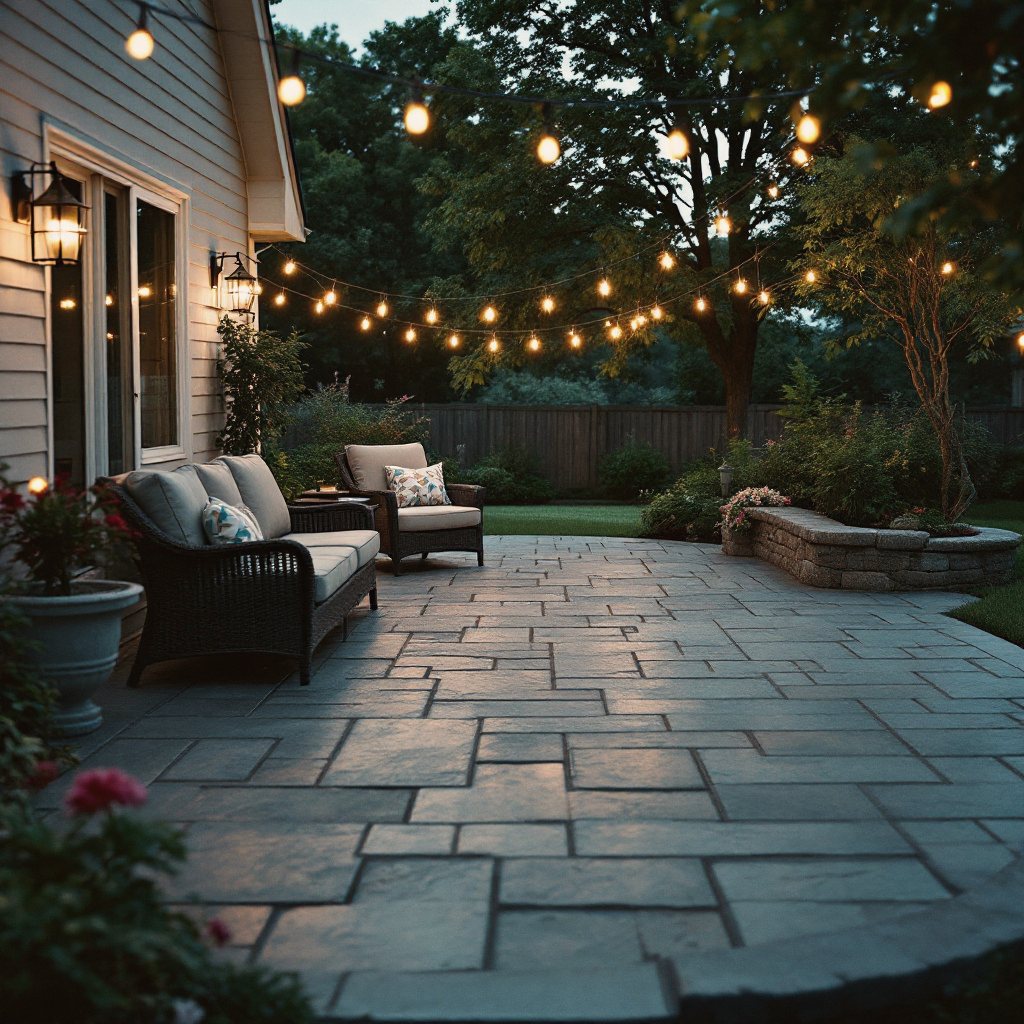
Slate, flagstone and wood-plank patterns pressed into fresh concrete with integral color — the high-end look without paver joints, paver weeds or paver prices.
Meaningfully. Installed paver patios around Fishers commonly run $18–$30 per square foot; stamped concrete lands $12–$16. And the gap widens after installation: pavers shift, sprout weeds in the joints and need re-sanding, while a stamped slab is one monolithic pour — nothing to shift, no joints to weed. The trade-off is honest too: if a stamped slab ever cracks outside a control joint it's visible, whereas a paver can be lifted and reset. Good jointing plans and a proper base are how we keep cracks where they belong.
Two-tone coloring — integral base color plus antiquing release — is what makes stamped work read as stone.
What patterns and colors work best?
Ashlar slate — the most requested. Rectangular stone pattern, reads formal, hides seams well.
Random flagstone — organic layout, pairs with pool decks and garden paths.
Wood plank — board texture without splinters or rot; strong choice for covered porches.
Borders only — a stamped, colored border wrapping a broom-finish field dresses up a driveway or patio for a fraction of full-stamp cost.
Color comes from integral pigment mixed through the load (never paint), plus a contrasting antiquing release that settles into the texture. Earth tones — buff, sandstone, walnut, charcoal — age best against Fishers brick and siding.
How do you keep stamped concrete looking new?
Reseal every 2–4 years. That's the whole list. The sealer carries the color depth and sheen, and letting it wear through is the one way owners degrade stamped work. We seal at install, tell you the product, and can put you on a reminder for the recoat.
Sealed smooth textures can be when wet. Around pools and on walks we add a traction additive to the sealer — grip without dulling the finish.
Can you stamp my existing patio?
Stamping needs fresh concrete. For existing slabs in good shape, a stamped overlay is possible but is a different product with different economics — usually replacement quotes out better and lasts longer.
Does stamped concrete crack more than regular?
No — same slab, same physics. Control joints get worked into pattern lines where possible so they disappear into the design.
How long does the color last?
Integral color is in the concrete permanently and cannot peel. The surface release and sheen depend on the sealer — recoat every 2–4 years and it keeps reading new.
Can you match my house colors?
We bring physical color charts to the quote and pour a sample area on request for larger projects. Screens lie about concrete color; charts and samples do not.